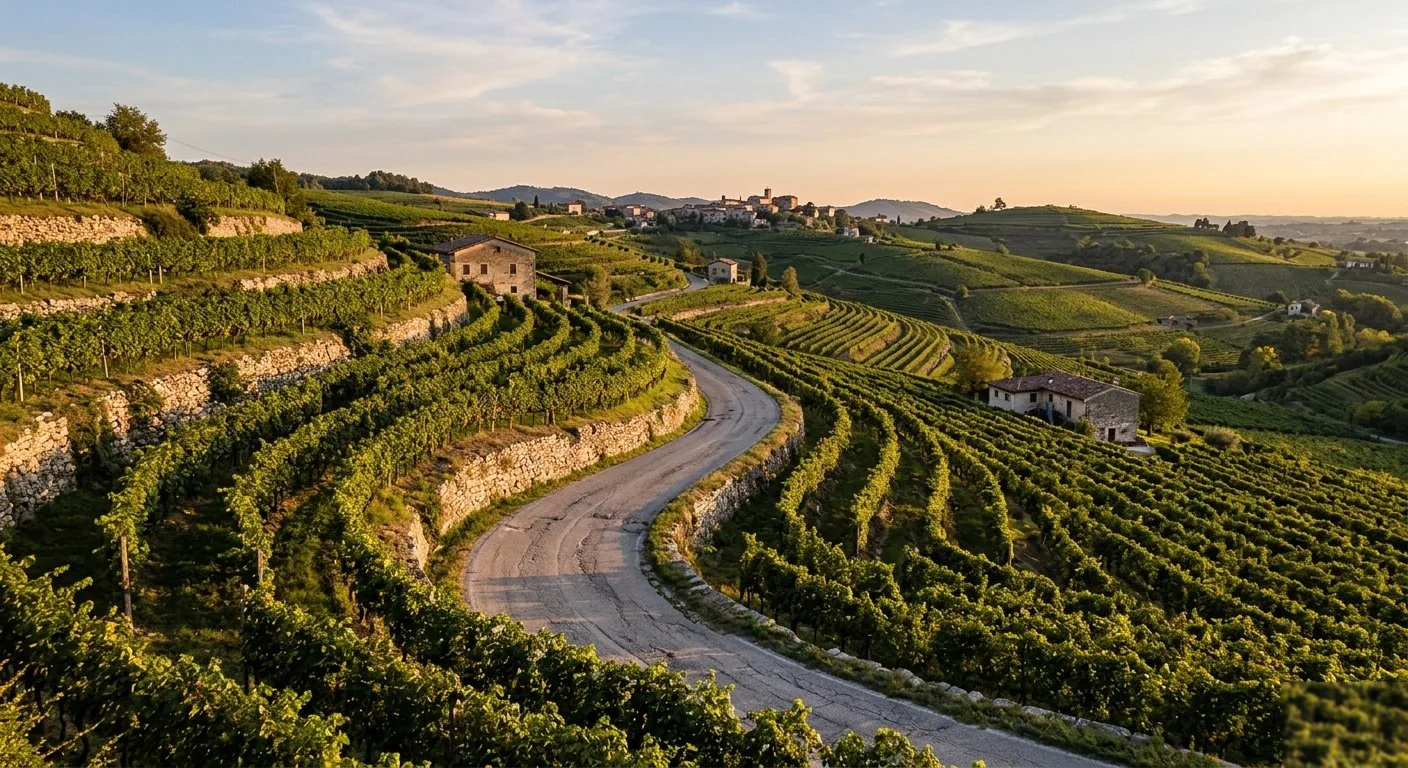
Two days is enough to understand Valpolicella — if you spend them well. This itinerary is built around the Classico zone, where the original, historic estates are concentrated, and assumes you are based in or arriving from Verona. A car is required.
The goal is not to visit as many producers as possible, but to taste the wines in a logical sequence, understand the landscape, and eat well enough to remember why Italy still does this better than anywhere else.
Arrive in Fumane
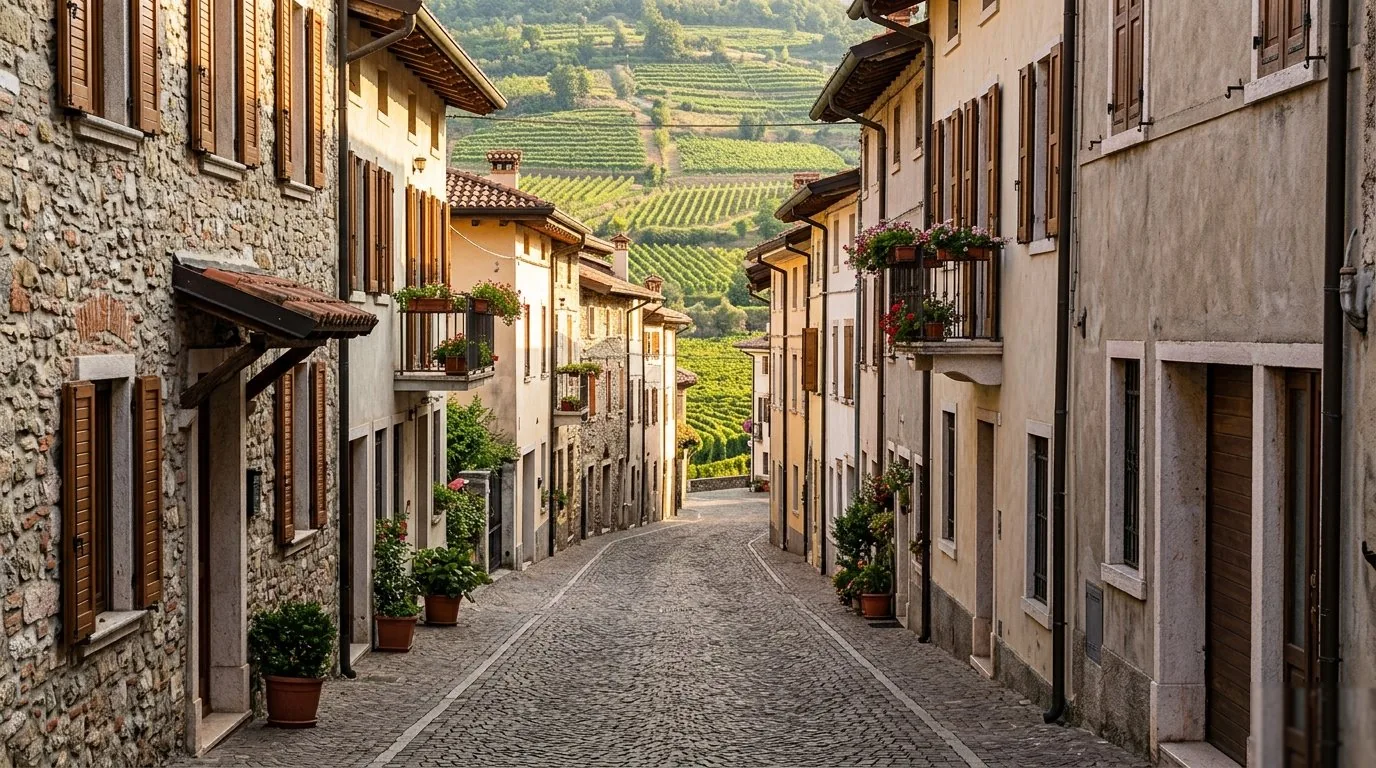
Start in Fumane, the most charming of the Classico villages, with a mid-morning estate visit to a producer who still practices traditional appassimento in the old way. The morning slot matters: winemakers are more available, the cellar is cool, and you will not be competing with the afternoon lunch crowd.
Taste the Classico Superiore first, then the Ripasso. Ask to see the fruttai if you visit in September–October — most producers are proud to show guests the drying lofts, and the difference between grapes at day 30 and day 90 of appassimento is a genuinely memorable thing to witness.
Lunch at a Farmhouse Trattoria
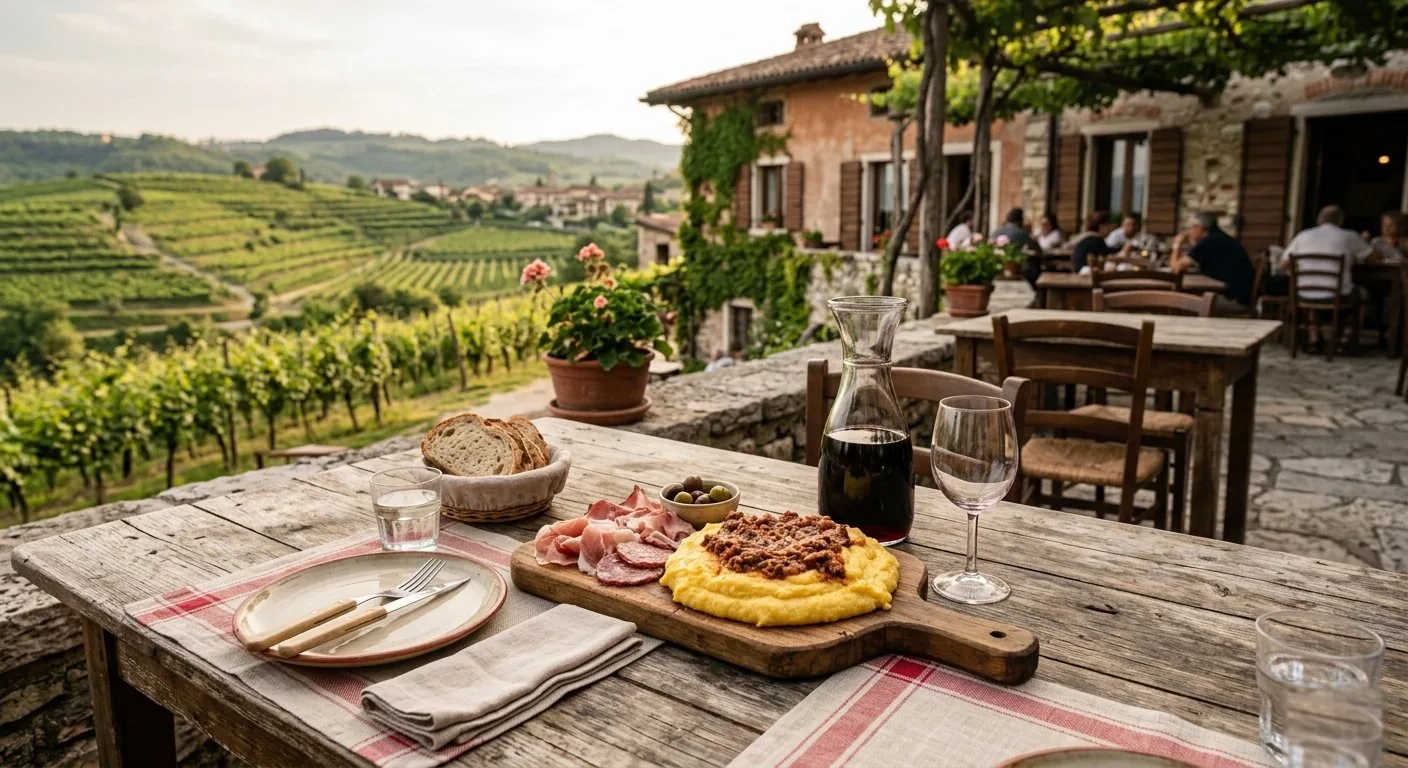
Lunch at a farmhouse trattoria in the Classico zone, not in Verona. The cuisine here is a direct expression of the landscape: polenta served on a wooden board, soppressa Veronese, pasta with wild mushrooms, brasato d'Amarone if you are lucky enough to find it on a menu. A carafe of the house Classico. No rush.
The good trattorias in the hills do not have English menus and do not have Instagram accounts. Ask your accommodation host where they would go. That is always the right answer.
The Ridge Road
Drive the ridge road between San Pietro in Cariano and Sant'Ambrogio in the early afternoon — the views across the valley justify the detour alone. Stop at a viewpoint and look north: you can see the beginning of the Lessini plateau, where the cold mountain air that makes appassimento possible descends each October. Looking south, the valley floor opens toward Verona and the Po plain.
This is the moment in most itineraries where you begin to understand that Valpolicella is a place with a specific geography, not just a label on a bottle.
Vertical Amarone Tasting
End the day at a cantina offering a structured vertical tasting — the same producer's Amarone across three different vintages. This is the single most educational thing you can do with a glass in Valpolicella. Tasting a 2019 alongside a 2013 alongside a 2006 reveals what time does to these wines: how the primary dried-fruit character evolves into leather, tobacco, truffle, and earth; how the tannins resolve; how the wine's centre of gravity shifts.
If your budget allows for a single splurge during the weekend, this is it. Vertical tastings at the estate typically cost €40–80 per person and are arranged in advance.
Aperitivo and Dinner
Return to your agriturismo or head to Negrar, the informal capital of the Classico zone. Aperitivo with a glass of Valpolicella Classico — served cool, slightly poured over a single ice cube if you want to annoy a traditionalist. Dinner does not need to be elaborate after a day of tasting. A plate of pasta, something grilled, a glass of Ripasso.
Masi Agricola, Gargagnago
Reserve the morning for one of the great historic estates. Masi Agricola in Gargagnago offers excellent guided visits with genuine educational context — the history of appassimento, the technical distinction between their different Amarone expressions, and a comprehensive tasting that covers the full range from Classico through to their prestige single-vineyard Amarone.
The Masi visit works well as a second-day anchor because you will arrive with a day's worth of context. The questions you ask will be better ones.
Lunch in Negrar
Lunch in Negrar. The weekly market fills the piazza on weekday mornings, and even on quieter days the town has a working rhythm that most of the purely touristic stops lack. Find a table outside. Order the risotto all'Amarone if available — it is the single best food preparation to understand how Amarone behaves as an ingredient as well as a drink.
Drive Toward Lake Garda
The afternoon drive toward Lake Garda is a palate-cleanser in the most literal sense. The western edge of Valpolicella dissolves gradually into Bardolino country — lighter reds from the same Corvina grape, made in a completely different style — and then into Lugana, the white wine zone on the southern shore of the lake.
Stop for a glass of Lugana Superiore at a lakeside estate. After two days of concentrated Amarone, a cold, mineral white wine tastes like a conversation you did not know you needed. It also sharpens your appreciation of everything you tasted in the hills.
Return to Verona
Return to Verona for the final evening. Dinner with Soave by the glass to start — the Veneto's great white wine is criminally underserved in most restaurants outside the region — and, to close, a risotto all'Amarone or a plate of aged Monte Veronese with a small glass of Recioto. Sweet, dense, haunting. The wine that came before Amarone existed.
What to Bring Home
One bottle of Amarone for a future occasion — ideally a vintage with five or more years of cellaring ahead of it. Do not open it this year.
One bottle of Ripasso for next month. Something from a producer you tasted at the estate, so the memory of the visit accompanies the wine when you open it.
And, if you can find it, a bottle of Recioto. Sweet, rare, and almost impossible to find outside the region at a fair price. This is the wine most likely to generate the best conversation at a dinner table populated by people who think they know Italian wine.