There is a technique practiced in the hills northwest of Verona that produces some of the most intense and complex red wines in the world. It is ancient, slow, and almost entirely dependent on the local climate and the patience of the families who have perfected it over centuries. It is called appassimento, and understanding it changes how you experience every bottle that comes from this valley.
What Is Appassimento?
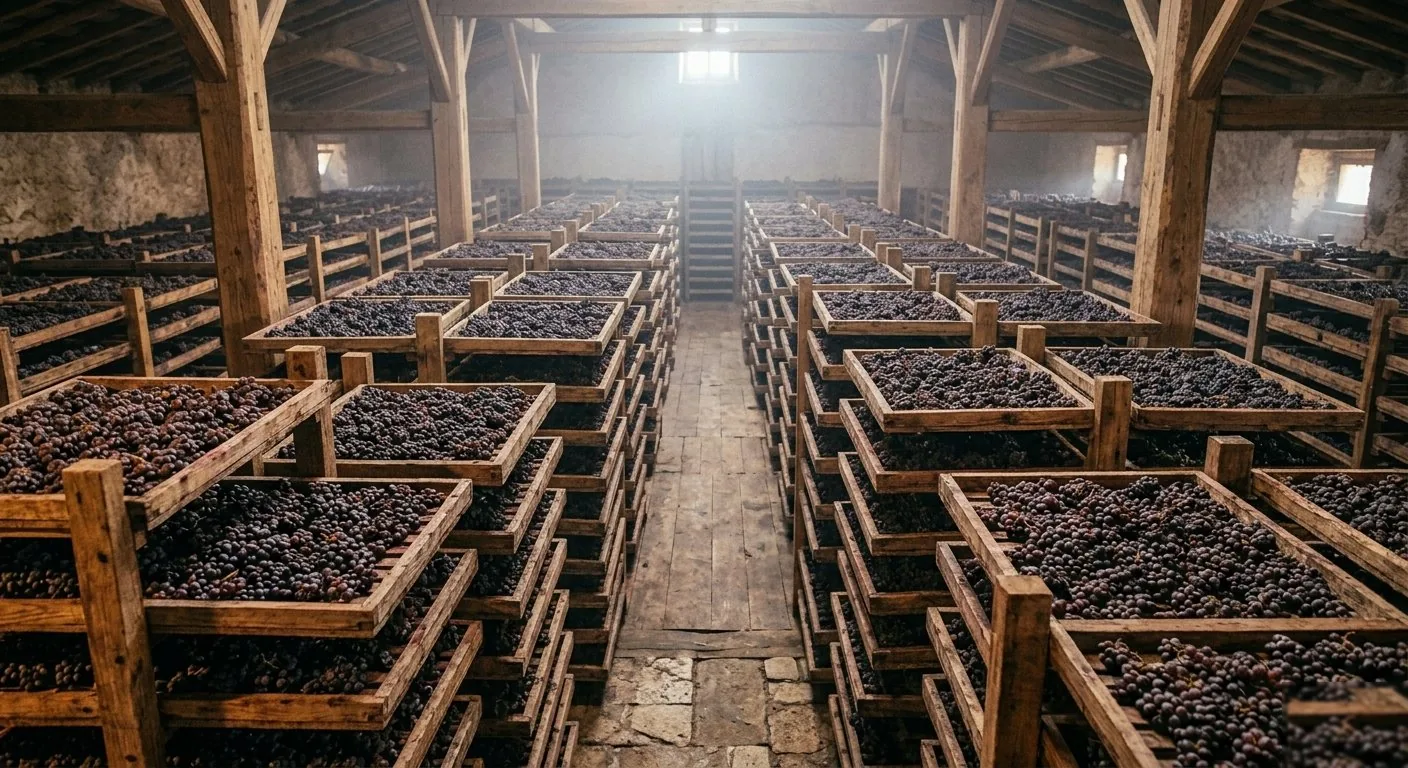
Appassimento — from the Italian appassire, to wither — is the practice of drying freshly harvested grapes for 90 to 120 days before pressing them into wine. The grapes are spread on wooden racks called arele in open lofts called fruttai, where cool mountain air circulates freely around each cluster. Over three to four months, the grapes lose up to 30% of their weight through natural evaporation.
What remains is a grape of extraordinary concentration. The sugars, flavours, tannins, and phenolic compounds that were diluted by water during the growing season are now compressed into a smaller volume. When this grape is eventually pressed and fermented, it produces wine of a density and complexity that no other method can replicate.
The Fruttaio: Where It Happens
The fruttaio (plural: fruttai) is the drying loft — the room or building where appassimento takes place. Traditionally these occupy the upper floors of estate farmhouses, with wide shuttered windows that can be opened or closed to regulate airflow depending on the weather. In modern estates, some fruttai are climate-controlled to manage humidity more precisely; in traditional ones, the windows and the wind do all the work.
The Pelèr — the cool, dry wind that descends from the Lessini mountains to the north — is essential to the process. It circulates through the fruttai, carrying moisture away from the drying grapes and preventing the Botrytis rot that would otherwise develop in the humid autumn air. Without the Pelèr, appassimento as practiced in Valpolicella would be impossible. It is one of the reasons why this technique, at this scale, exists nowhere else in the world.
The Process: Step by Step
Selective Harvest
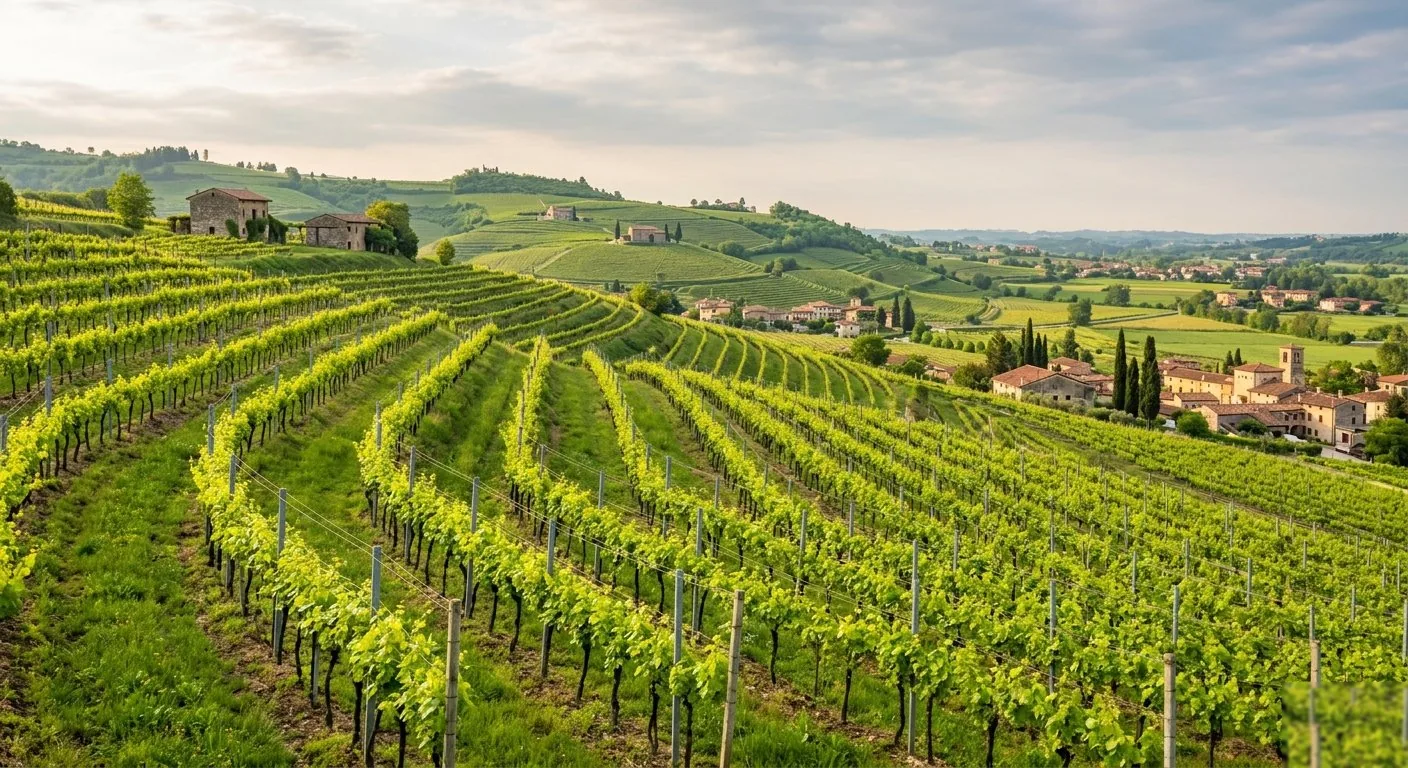
For appassimento wines, only the best grape clusters are selected at harvest — loose, well-ventilated bunches with thick skins and no disease or damage. Tight, dense clusters are set aside for regular Valpolicella. The selection is done by hand, bunch by bunch. This is why the best Amarone comes from low-yield vineyards on hillside terraces: density of flavour in the berry depends on stress — poor soils, limited water, direct sun.
Some producers do a pre-drying selection in the vineyard weeks before harvest, tying canes or removing leaves to expose specific bunches to more sun and wind. Others simply select rigorously at picking.
Drying on the Arele
Harvested clusters are laid on the arele — single-layer wooden racks made from bamboo, cane, or more recently food-safe plastic — and stacked in the fruttaio. Air must circulate around every bunch; clusters that touch risk developing rot. The fruttaio manager checks daily, removing any deteriorating grapes before rot can spread.
The drying runs for 90 to 120 days depending on the producer's style and vintage conditions. In warm, dry years grapes can reach target weight loss faster; in cool, humid years — which can produce the most complex Amarone — the process requires more active management. By January, the Corvina clusters have lost 25–30% of their original weight. They look like large, intensely concentrated raisins — dark, wrinkled, perfumed with dried cherry and spice.
Pressing and Fermentation
The dried grapes are pressed — gently, as the skins are now fragile — and the must begins fermentation. This is the most technically demanding phase. The must is so rich in sugar that it stresses the yeast; fermentation is slow (30–50 days), temperature-sensitive, and must be carefully monitored. The winemaker's goal for Amarone is to ferment to near-dryness, consuming almost all the sugar and achieving an alcohol level of 15–17%.
For Recioto, fermentation is stopped while significant residual sugar remains — creating the sweet wine that predates Amarone and is thought to be the accidental origin of the dry style.
Ageing in Oak
After fermentation, Amarone moves into large Slavonian oak barrels — botti — where it ages for a minimum of two years (four for Riserva). The large format oak imparts structure and oxygen exposure without overwhelming the fruit with new-oak flavour. Many producers age considerably longer than the DOCG minimum: Bertani holds their Amarone for ten years before release; Dal Forno Romano often holds for seven or more.
This extended ageing is not simply about tannin softening. It allows a genuine chemical evolution: the dried-fruit primary flavours of the young wine slowly integrate with the oak and oxidative notes, developing the leather, tobacco, dark chocolate, and spice character that defines mature Amarone.
Three Wines, One Technique
Appassimento produces three distinct wines in Valpolicella — each using the dried-grape base in a different way:
Amarone della Valpolicella
100% appassimento grapes, fermented to dryness. The full expression of the technique — 15–17% alcohol, extraordinary complexity, built for decades of ageing.
Learn more →Recioto della Valpolicella
The original appassimento wine. Same technique as Amarone but fermentation is stopped early — leaving substantial residual sugar and creating a rich, sweet red of rare depth.
Learn more →Valpolicella Ripasso
Indirectly appassimento-influenced. A base Valpolicella is re-fermented on the spent skins from Amarone production, absorbing colour, body, and flavour complexity.
Amarone vs Ripasso →Why Appassimento Only Happens Here
Appassimento exists in other regions — Valpolicella is not entirely alone. The Recioto di Soave uses it for white wine; producers in Sagrantino di Montefalco dry grapes for their Passito wines; a handful of Sicilian producers dry Nero d'Avola for dessert wines. But nowhere else does appassimento define an entire appellation and its dry red wines at this scale and quality level.
The reason is the Lessini mountains and the Pelèr wind. Without reliable, cool, dry airflow through the fruttai from October through January, the grapes would rot rather than dry. The combination of mild autumns, the specific mountain geography, and centuries of accumulated knowledge about managing the process — when to open the windows, when to close them, which bunches to remove, when to press — is what makes Valpolicella irreplaceable.
Seeing Appassimento in Person
The fruttai are open for visits from October through December — the only window when appassimento is actually in progress. To see the drying lofts full of Corvina clusters and smell the concentrated grape perfume that fills the estate buildings during this period is one of the most memorable wine experiences available anywhere.
Tours during appassimento season book out months in advance. If October is your target, book your cellar visit and accommodation as early as possible.
See appassimento in progress — fruttaio visits are available in October and November on guided cellar tours.
Book an Appassimento Tour