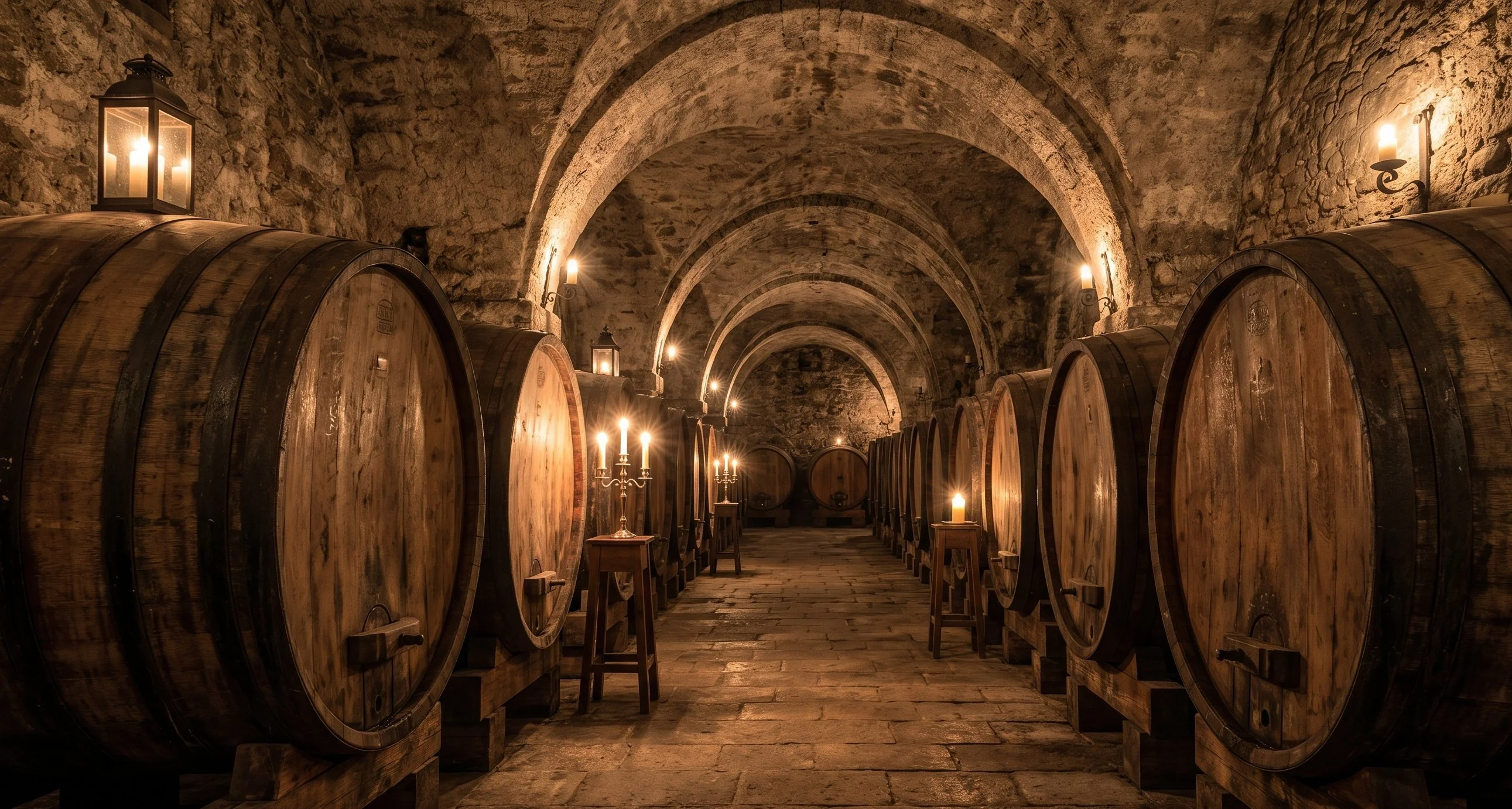
Valpolicella has around 2,000 grape growers and over 200 bottling producers. Most are not set up for visitors. A small number are — and among those, the quality of the visit varies enormously: from rushed group tastings in a shop to private afternoons with a fourth-generation winemaker in a cellar that has been making Amarone since before your parents were born.
This guide is about the second kind. These are producers where the visit itself is worth the trip — where you leave understanding something about Amarone that you could not have learned from a bottle alone.
The Iconic Estates
These producers are internationally recognised, consistently excellent, and receive visitors in a structured way. Good for first-time visitors to the region who want a reliable benchmark experience.
Allegrini
One of the most important names in modern Valpolicella. Allegrini's flagship Amarone is a benchmark for the contemporary style — precise, structured, deeply coloured, with a clarity of fruit that distinguishes it from the more oxidative old-school approach. Their single-vineyard Amarone "La Poja" is a Corvina-only wine that challenged the DOCG rules when it was first made.
The estate winery in Fumane is architecturally impressive and receives visitors with appointments. Guided cellar tours are professional and informative; the tasting includes their full range including Soave and the Valpolicella DOC. One of the best introductions to the zone available.
Masi Agricola
The estate most responsible for bringing Amarone to international attention, and the inventor of the modern Ripasso method. Masi's Costasera Amarone is the most widely recognised label in the appellation. Their research centre — the Masi Tecnica — is unique in the wine world: an in-house institute dedicated exclusively to the study of appassimento and native Venetian grape varieties.
Visits to the Serego Alighieri estate (owned by the descendants of Dante Alighieri since 1353) are among the most historically resonant wine experiences in Italy. The combination of history, architecture, and wine quality is difficult to match anywhere in the region.
Zenato
Founded in 1960 by Sergio Zenato, now run by his children Alberto and Nadia with remarkable consistency of quality. Their Amarone Classico is one of the most reliably excellent in the appellation — dense, tannic, built for decades. The Riserva "Sergio Zenato" is their flagship: one of the most compelling bottles produced in Valpolicella at any price.
Tastings at the estate are intimate and personal — the family is directly involved in hosting visitors. The combination of cellar depth and family warmth makes this one of the most memorable visits in the zone.
The Classic Family Estates
These are mid-sized family producers with a long history in the Classico zone — less internationally profiled than the iconic names, but often producing wine that is equally good or better, and offering a more personal visit experience.
Tommasi Viticoltori
Seven generations of the same family in the same valley. Tommasi's Amarone is a dependable, beautifully crafted wine that represents the Classico zone honestly without chasing scores or critics. Their Ripasso is one of the best-value bottles in the appellation — widely available but consistently over-delivering for the price.
The estate tasting room is in a converted farmhouse with vineyard views. A comfortable, unhurried experience with a family that genuinely enjoys showing their wines.
Bertani
Founded in 1857, Bertani makes Amarone in a style that is unlike any other producer in the region: deliberately oxidative, aged for a minimum of ten years before release, with a colour that can appear almost tawny in old vintages. Divisive among critics but irreplaceable as an experience of what Amarone can become with genuine time.
Their historic cellar in Grezzana contains bottles going back decades and is one of the most extraordinary wine spaces in the Veneto. A visit here is for serious enthusiasts only — the wines are not easy, but nothing else in the zone tastes like them.
Smaller Producers Worth the Detour
These estates are less known outside the region — some are barely known within it. They are where the most interesting and personal cellar experiences happen.
Le Ragose
One of the most honest, unfashionable, genuinely compelling estates in the Classico zone. Le Ragose makes Amarone the way it was made forty years ago — no concessions to international taste, no new oak, no consultant winemakers. The wines need time and reward patience with a complexity that most modern Amarone cannot match.
Visits are personal and unhurried. The family is warm and direct; the cellar is old and beautiful. If you go to one small estate in Valpolicella, this is the one.
Ca' La Bionda
Marano is the least-visited of the five Classico valleys and Ca' La Bionda is among its finest producers. Their Amarone has a finesse and aromatic precision that is rare in the appellation — less massive than some Negrar examples, more perfumed, with better natural acidity for ageing. A wine that rewards the extra thirty minutes of driving to get there.
How to Book a Cellar Visit
Almost every estate in Valpolicella requires an advance appointment — walk-ins are rarely welcomed and often impossible. Most producers list a contact email on their website; a simple message specifying your preferred date, group size, and interest in tasting (and which wines) is all that is needed.
For visitors who do not speak Italian or want guaranteed access without the logistics of direct booking, a guided tour is the practical solution — guides have existing relationships with estates and can access cellars that are not open to independent visitors.
Access the best Valpolicella estates — including cellars not open to independent visitors — through a guided tour.
Browse Cellar Tours