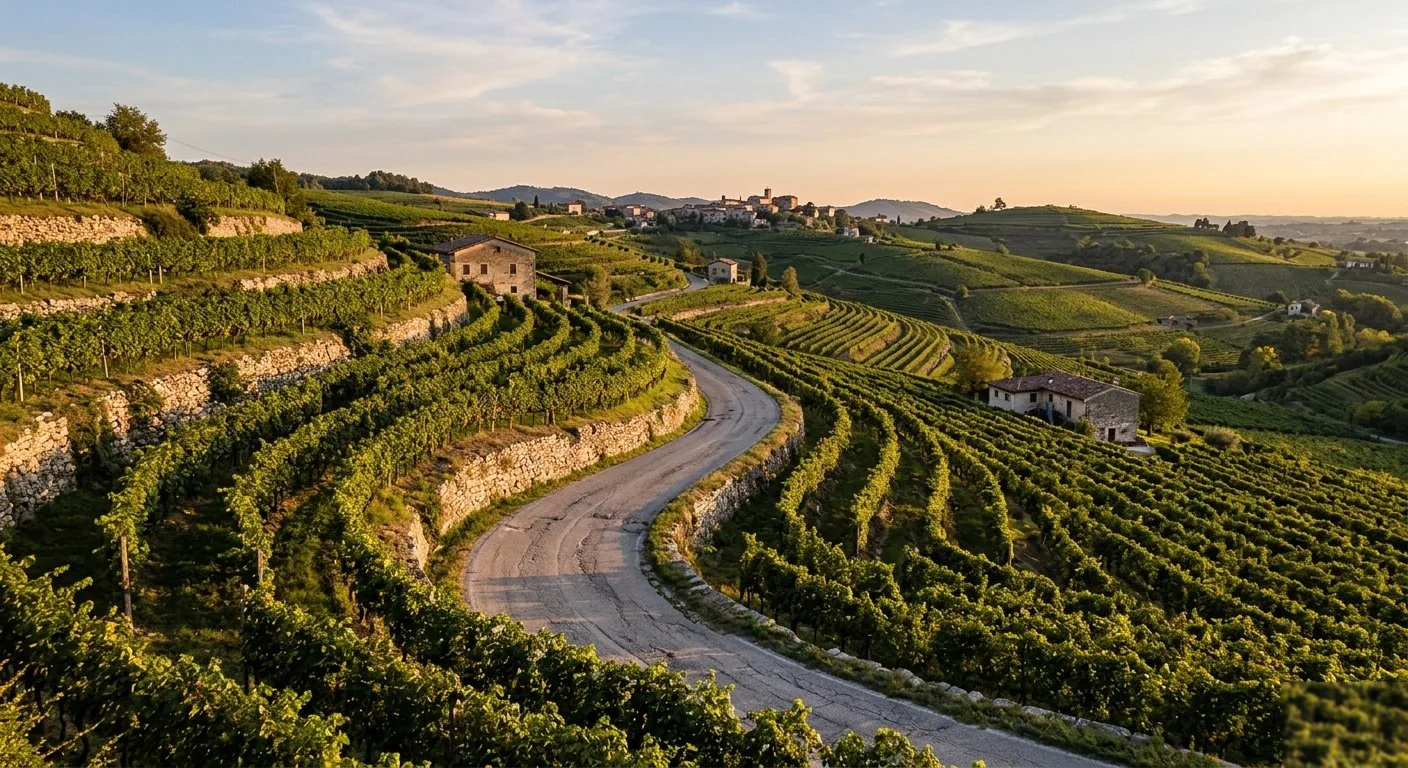
Verona and Valpolicella are separated by about 15 kilometres and a complete change of atmosphere. The city ends, the hills begin, and within twenty minutes of leaving Piazza Bra you are on roads lined with Corvina vines. Getting there, however, requires a little planning — especially if you intend to taste seriously once you arrive.
Here is every option, with honest advice on which actually makes sense depending on what kind of trip you are planning.
How Far Is Valpolicella from Verona?
| Destination | Distance from Verona | Drive time |
|---|---|---|
| San Pietro in Cariano (gateway to the Classico zone) | 14 km | 20 min |
| Fumane (heart of the Classico) | 18 km | 25 min |
| Sant'Ambrogio di Valpolicella | 20 km | 28 min |
| Negrar di Valpolicella | 12 km | 18 min |
| Marano di Valpolicella | 22 km | 30 min |
The geography is simple: the valley runs northwest from Verona. The Valpolicella Classica zone — the original, highest-quality sub-zone — occupies the western hills between Fumane, Sant'Ambrogio, and Negrar. This is where most of the serious estates are, and where most visitors want to go.
Your Options
Rental Car
The best option for independent travellers spending multiple days in the region and visiting estates at their own pace. Pick up at Verona Porta Nuova station or Catullo Airport — both have all major rental desks. Roads in the Classico zone are narrow and unmarked; a GPS is essential.
The critical problem: you cannot drive after wine tasting. If you plan to taste seriously at two or three estates in a day, you need a designated driver. Factor this into your group logistics before booking.
Best for multi-day independent tripsGuided Tour from Verona
Transport, guide, estate access, and tasting all included. You are collected from a central Verona meeting point, driven into the Classico zone, and returned to the city at the end. No driving, no navigation, no logistics — just tasting.
The best tours also include access to estate cellars and winemakers that are not open to independent visitors. For a single-day visit centred on wine, this is the most complete experience available.
Best for single-day wine-focused visitsTaxi or Private Transfer
A taxi from Verona centre to a Classico estate typically costs €40–60 one way. Radiotaxi Verona (+39 045 532666) or pre-booked private transfers are both reliable. The challenge is the return: taxis in the valley are scarce and must be pre-booked — do not assume you can call one from an estate at the end of the day.
Best used for a single estate visit where you have confirmed the return logistics in advance, or to reach accommodation in the hills on arrival day.
Good for single estate visitsPublic Bus (Line 163)
ATV Line 163 connects Verona (Porta Nuova station) to several villages in the Valpolicella valley including San Pietro in Cariano and Fumane. Departures are infrequent — typically 5–7 per day in each direction — and the last return bus leaves the valley in the early evening.
The bus stops in village centres, not at estate gates. Most wineries require a 15–30 minute walk from the nearest stop on roads without pavements. Possible in spring and autumn; genuinely uncomfortable in summer heat or winter cold. Not recommended for a wine-focused day.
Only if budget is the absolute priorityOur Honest Recommendation
For the vast majority of visitors — people who want to taste Amarone seriously, see a cellar, and understand what makes this region different — a guided tour from Verona is the right choice. The price includes everything, the driving problem disappears entirely, and you get access to estates and winemakers that are simply not reachable independently.
If you are staying in the valley for two or more nights and want to explore at your own pace across multiple days, rent a car — but designate one person as the non-tasting driver for each winery day, or plan one estate visit per afternoon and pace yourself.
The public bus is a last resort, not a practical option for wine tourism.
Practical Details
Parking: Most estates have free parking. In village centres parking is usually available on side streets. Verona's historic centre has ZTL (restricted traffic) zones — if your hotel is in the centre, park outside the ZTL and walk in.
Driving in the Classico zone: Roads are narrow and wind between vineyard walls. Google Maps works well but occasionally routes you down tracks that are technically passable but not comfortable. Stay on the SP4 and SP12 as your main arteries and branch off from there.
Petrol: Fill up in Verona or at the station in San Pietro in Cariano before heading into the hills. Stations in the upper valley are sparse.
Phone signal: Reasonable in villages, patchy on some hillside roads. Download offline maps before you go.
The simplest way to reach Valpolicella from Verona — with transport, tasting, and a winemaker as your guide all included.
Browse Guided Tours from Verona